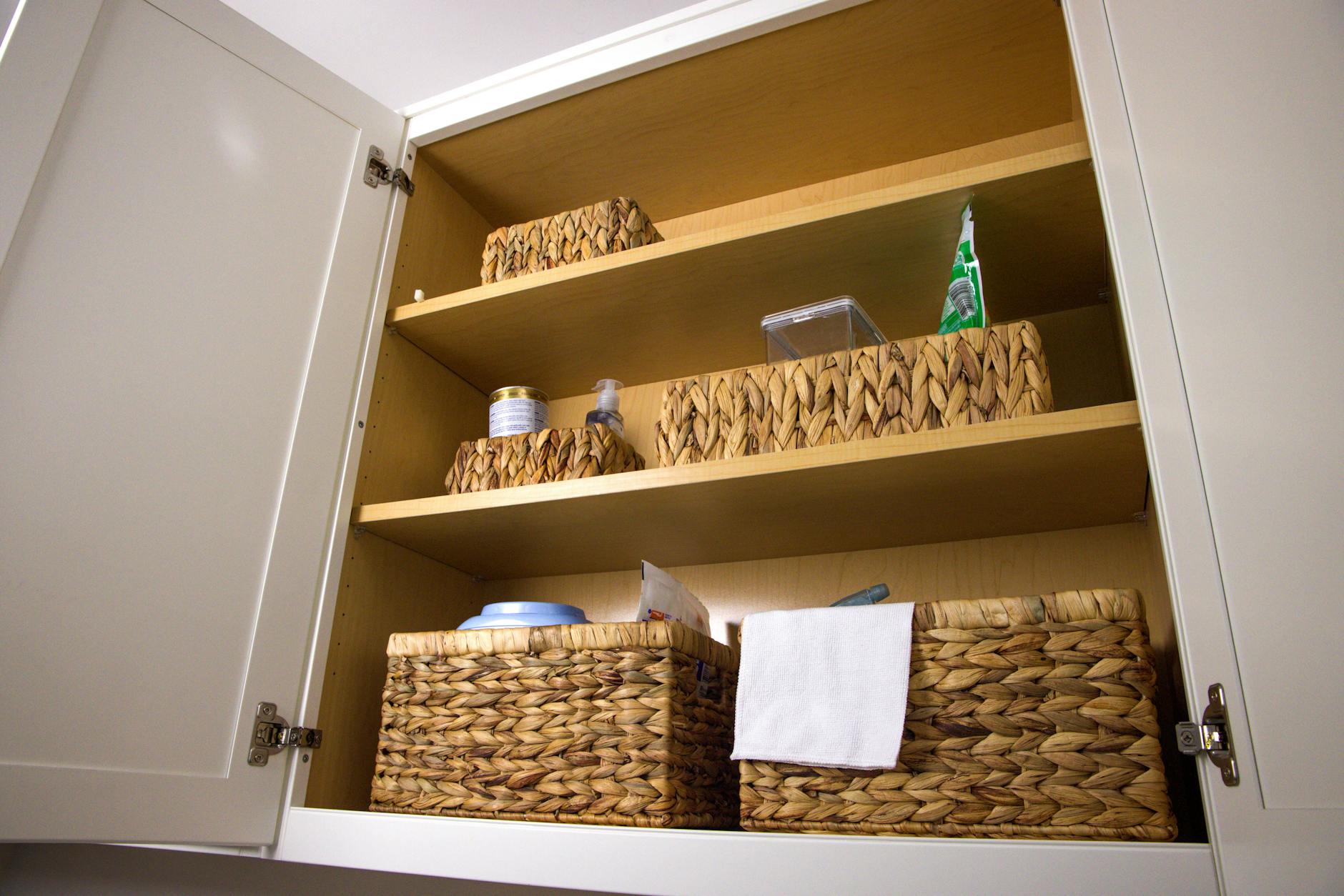
You add storage to a tiny house without overstuffing it by building it where space is wasted (under the floor, up the walls, inside the furniture), assigning every container a fixed job, and capping what you own to what those containers hold. The limit is the storage you have, not the storage you could squeeze in. Once every cubic foot is spoken for, new purchases have nowhere to go, and that is the point.
Most tiny-house storage problems are not caused by too little storage. They come from storage that is hard to reach, storage that holds the wrong things, and storage that quietly grows until the house feels like a closet you live inside. The sections below cover where to find real capacity, how to keep it usable, and how to stop it from filling up.
Start with a count, not a shopping list
Before you buy a single bin, measure what you own by category. Pull everything out of one category (kitchen, clothes, tools, paper, hobby gear) and look at it in one pile. Skipping this step tends to mean buying storage for the stuff you imagine instead of the stuff you have.
Then set a budget of space for each category. A simple method:
- Measure the usable storage you already have in linear feet for hanging, cubic feet for bins, and shelf inches for books or dishes.
- Assign each category a home, such as one 24-inch drawer for all cooking utensils.
- Anything that does not fit in its assigned home leaves the house, goes into seasonal storage elsewhere, or replaces something already inside.
This turns storage into a closed system. You are no longer asking where something can go; you are asking what it replaces.
Use the dead zones first
A tiny house on wheels is usually kept to about 8.5 feet wide and 13.5 feet tall to travel without special permits (limits vary by state), so every inch counts. Four zones are routinely wasted and worth claiming before you add furniture.
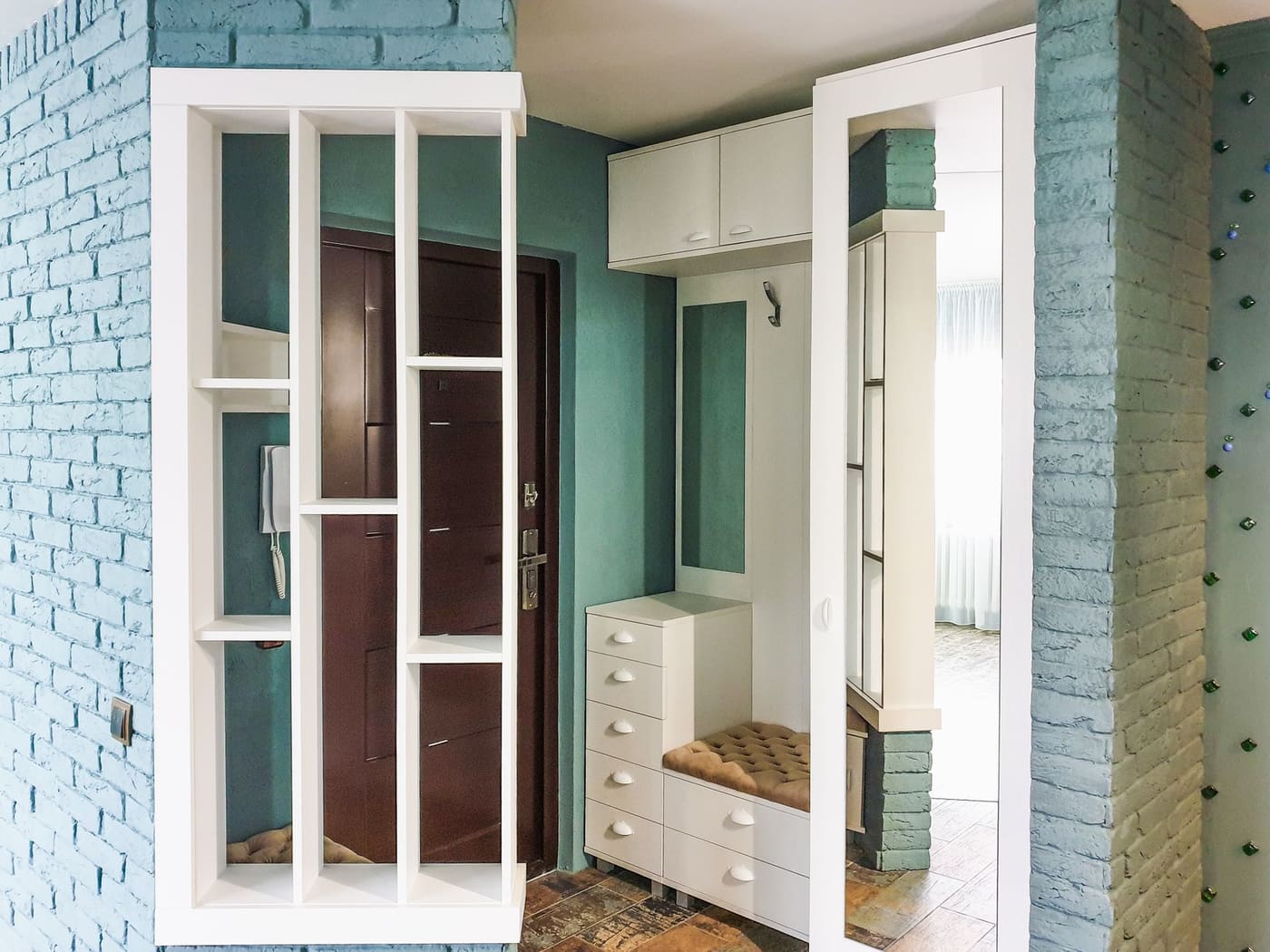
- Under the stairs or ladder: Stair treads can be built as drawers, and a stair run of 4 to 6 steps can hold a surprising amount of pantry or shoe storage. A shallow pull-out under the bottom step handles things like cleaning supplies.
- Under the bed or sleeping loft platform: A lifted platform bed with 12 to 18 inches of clearance holds bulk items in low bins or on slide-out trays. Gas-strut lift-up platforms exist, but trays that pull out are easier to reach when the mattress is heavy.
- The toe-kick area under cabinets: A 3 to 4 inch tall drawer in the toe-kick can hold flat items such as baking sheets, cutting boards, or placemats.
- Wall depth: A wall framed with 2x4 studs has a cavity about 3.5 inches deep. A recessed shelf between studs, only a few inches deep, holds spices, toiletries, or paperbacks without protruding into the room. Do not cut into structural framing or any wall that contains wiring or plumbing without knowing what is inside; ask a builder or electrician before opening a wall.
Go vertical, but keep daily items between knee and shoulder
Wall space is the cheapest storage in a tiny house, but height has a cost. Anything you reach for every day should live between roughly knee height and shoulder height, around 20 to 60 inches off the floor. Above that zone is for items you touch weekly or less, and below it is for heavy things that you only move occasionally.
A workable vertical stack looks like this:
- Floor to 18 inches: Heavy, rarely moved items such as tools, bulk food, and luggage.
- 18 to 60 inches: Daily plates, cups, clothes, and cooking tools.
- 60 inches and up: Off-season clothes, spare linens, and backup supplies in labeled bins.
Rails with hooks or a rail-and-bin system keep tools and kitchen items visible and reachable while freeing drawer volume. In a loft, ceiling height is often tight, so shallow shelves along the rafters or knee-wall cubbies make better storage than anything freestanding.
Keep shelves shallow. A 10 to 12 inch deep shelf is deep enough for books, plates, and bins, but shallow enough that you can see everything on it. Deep shelves in a tiny house become black holes where things disappear behind other things.
Pick furniture that stores, then check what it really holds
Storage furniture is helpful only if you can open it without moving three other things. Test each piece against a simple question: can I reach the contents in under 10 seconds, without moving anything else?
| Option | Typical capacity | Reach rating | Watch for |
|---|---|---|---|
| Platform bed with drawers | Large | Good if drawers pull out fully | Drawers blocked by walls or ladders |
| Lift-up storage bench | Medium | Poor for heavy stacks | Items pile up, bottom layer is forgotten |
| Stair drawers | Medium | Good | Need solid construction for daily use |
| Ottoman or seat with a lid | Small to medium | Fair | Easy to overfill |
| Wall shelves with rails | Medium | Excellent | Items become visible clutter |
The articles on which furniture is actually worth it in a tiny house and on how a layout can support better storage go further on matching furniture to your routine.
Contain by category, and label the container
Open shelves, drawers, and bins work only when each one has one clear purpose. Mixed bins turn into junk drawers. A few practical rules:
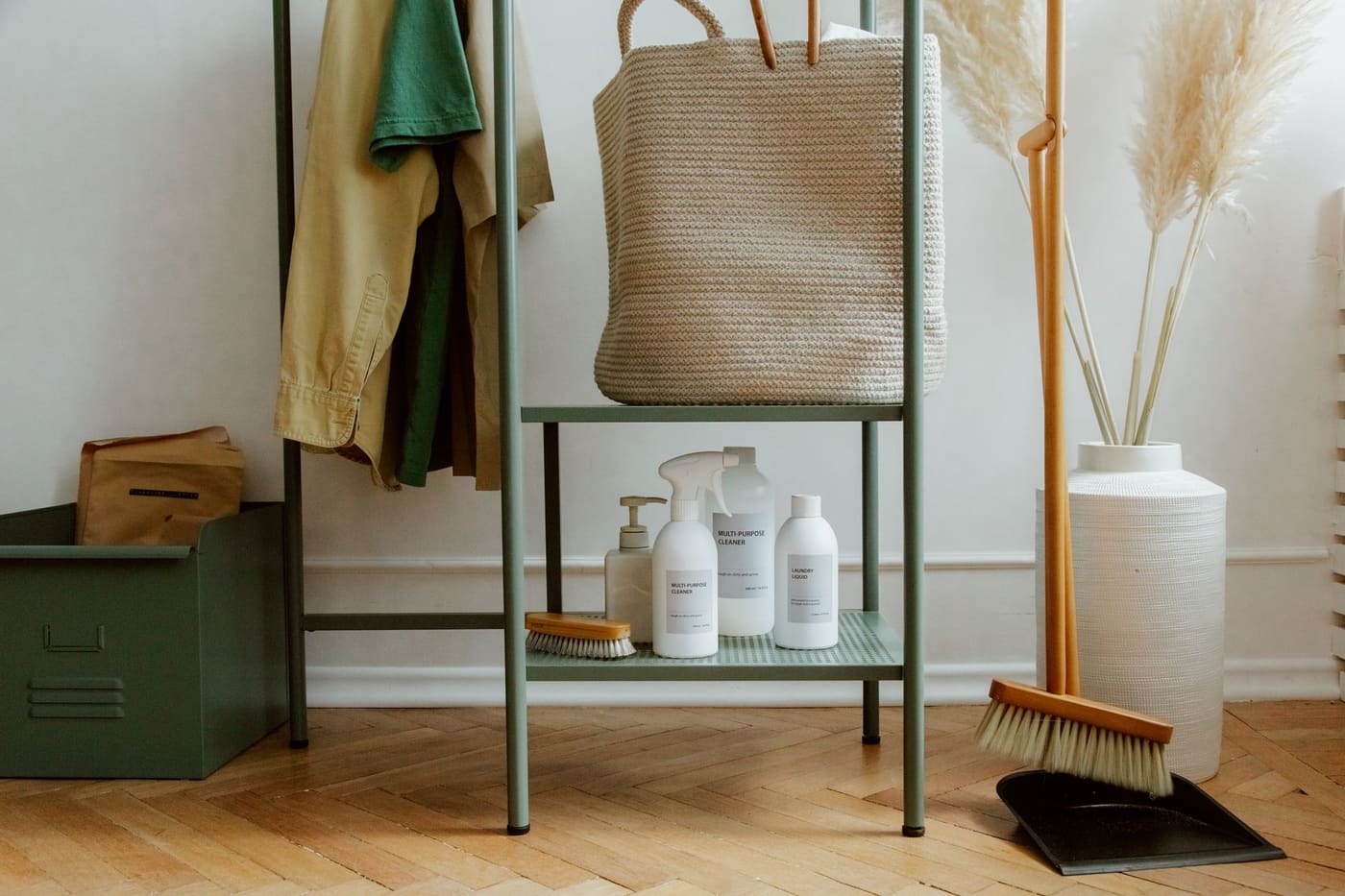
- Use uniform containers. Matching bins stack, fit together, and look calmer than mismatched boxes. Soft-sided fabric bins 11 inches wide fit many standard shelves.
- Use clear or labeled fronts. Labels take under a minute per bin and save you from opening everything to find a charger.
- Prefer drawers and pull-outs to deep shelves. Seeing the top of everything is better than seeing the front of the first item.
- Group by use, not by type alone. Put a coffee mug, filter, and beans together if you make coffee as one task.
- Fill to about 80 percent. A drawer filled to the brim cannot absorb one more item and still close.
Vacuum storage bags can shrink soft items like comforters and sweaters. They suit off-season rotation better than daily use, and some fills can lose loft if kept compressed for long, so check the care label.
Handle the awkward categories
Some items consistently break tiny-house storage plans.
Shoes and outerwear
Entry zones overflow fast. Limit yourself to one pair per person by the door, and store the rest in a lidded bin or on a narrow rack. A wall hook rail with 4 to 6 hooks usually covers a household of two.
Kitchen gear
A tiny kitchen cannot hold a full set of everything. Choose one pot size you really use, one frying pan, one baking sheet, and nest the rest. Look at which items you reached for in the last two weeks, and store the other things in the least reachable spot or remove them. The kitchen advice on what makes a tiny house kitchen feel usable covers this in more depth.
Paper, tools, and hobbies
These categories tend to stay forever. Scan important documents and keep only originals that must be physical, such as titles and birth certificates, in one fireproof pouch. Hobby gear needs a hard cap, such as a single 18-gallon tote.
Safety and structure: weight, moisture, and mess
Storage adds weight, and in a house on wheels, weight placement matters for towing. Heavy items stored high in a loft or at one end can shift the center of gravity and affect how the trailer tows. Keep dense items low and close to the axles when you can, and check the trailer’s rated capacity, which is printed on a plate on the frame. If you are unsure how your load is distributed, a public scale can weigh the loaded trailer so you can compare it with that plate.
Moisture is the other hazard. Closed storage in a tiny house can trap humidity, which encourages mildew, especially on exterior walls and under beds. Leave a small gap behind bins and use breathable bins in damp spots. The US Environmental Protection Agency advises keeping indoor relative humidity below 60 percent, ideally between 30 and 50 percent. The same guidance says you can usually clean a moldy patch smaller than about 10 square feet yourself, but larger areas, or mold that keeps coming back, call for finding the water source and possibly a professional.
Installing built-ins that touch wiring, plumbing, or propane lines is not a casual DIY job. Call a licensed electrician or gas fitter for anything near those systems.
Stop storage from slowly overflowing
Systems fail when the inflow of stuff is higher than the outflow. A few habits keep a tiny house from refilling itself:
- One in, one out. Every new item replaces something of the same type.
- A 48-hour pause on purchases that need a home, so you can measure where they would go first.
- A quarterly review. Open each container and remove anything you have not touched in a season.
- A single donation bag kept in a closet so removal is easy and immediate.
If the house still feels crowded after all this, the cause may be visual rather than physical, which is covered in why a tiny house still feels cluttered even when you declutter.
To check what your belongings add to the load, use the weight budget and declutter and capacity checklist.
Where this comes from
The humidity and mold figures come from the US Environmental Protection Agency’s “A Brief Guide to Mold, Moisture, and Your Home”. The road width and height limits are commonly cited US figures that differ by state. The rest is general space-planning advice rather than test results. Rules, limits and prices change and vary by state and town, so check the current figures with your state transport agency and local building office.