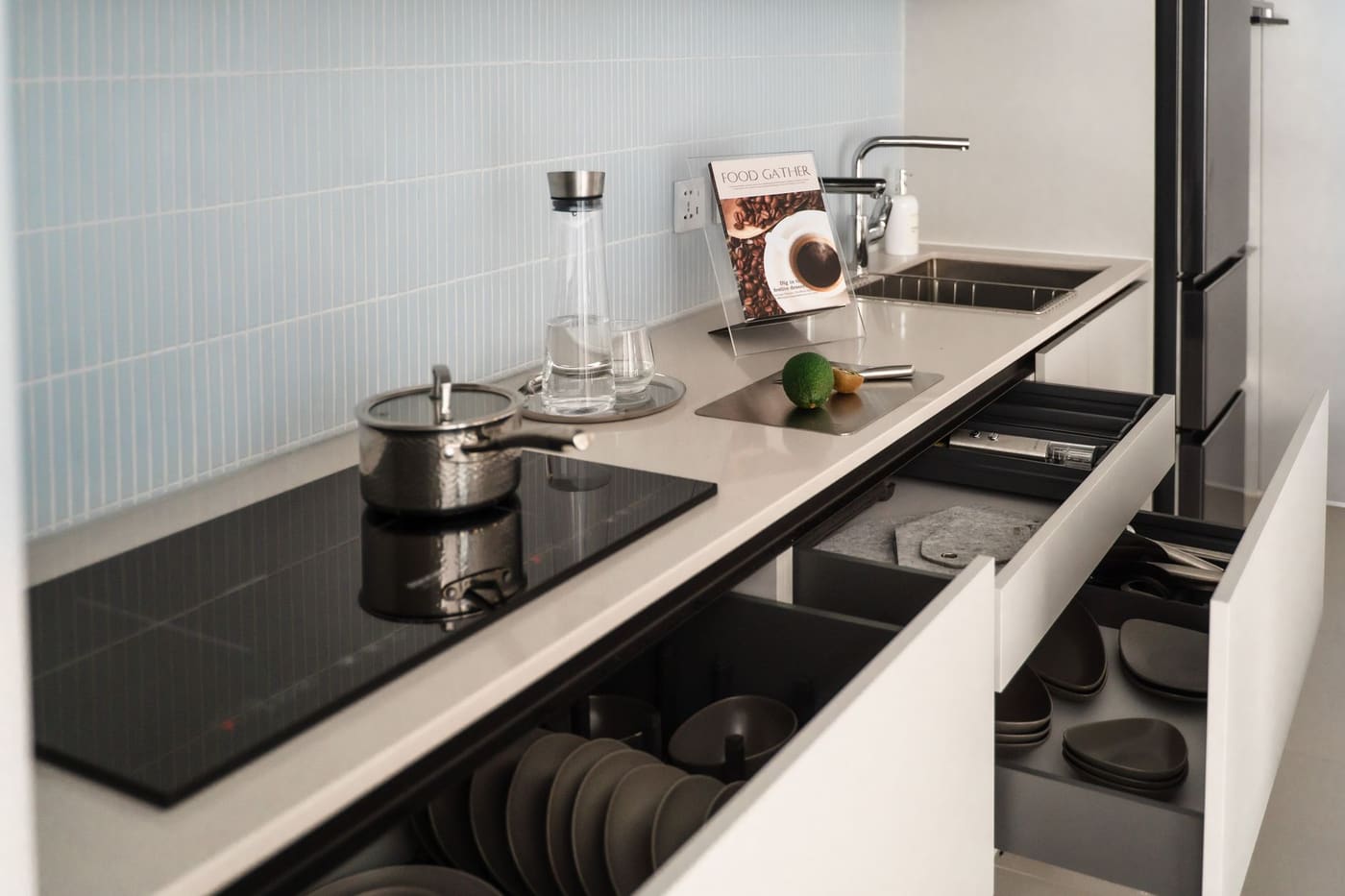
The tiny-house kitchen features worth prioritizing are, in order: a long stretch of clear prep counter, storage that sits right where you use it, a deep single sink, real ventilation, and just enough appliance power for how you cook. Extra gadgets, decorative open shelving, and a full-size everything come last. Spend your budget and floor space on the features you will use every day, not on the ones that look good in photos.
A tiny kitchen can be as small as 4 to 8 linear feet of counter, so every feature has a real cost in space, weight, and money. This guide ranks features by how much they improve daily use, with rough costs and the safety points that matter when fire, gas, and electricity share a few square feet.
Rank features by daily payoff
Not every kitchen feature deserves the same space. Use this ranking as a starting point, and adjust it for how you cook.
| Priority | Feature | Why it ranks here |
|---|---|---|
| 1 | Clear prep counter of 24 to 30+ inches | Every meal uses it |
| 2 | Deep drawers near the stove and prep area | Used daily, easy to see contents |
| 3 | Single deep sink with a cover or board | Doubles as counter space |
| 4 | Exhaust ventilation to the outdoors | Safety, moisture, grease |
| 5 | Two-burner cooktop | Handles most meals |
| 6 | Compact oven, convection or toaster | Baking and roasting |
| 7 | Small refrigerator, 4 to 10 cubic feet | Daily food storage |
| 8 | Vertical storage and rails | Frees drawers and counter |
| 9 | Dishwasher, extra gadgets, large appliances | Occasional benefit, high space cost |
If you cook elaborate meals every day, priorities 5 and 6 may move up. If you mostly reheat and make simple meals, a one-burner induction plate and a microwave may be enough. The point is to rank by your own routine, then fund the top of the list first. For the fundamentals of layout and counter dimensions, see what makes a tiny house kitchen feel usable.
Prep counter is the feature to protect
If you have to choose between more cabinets and more counter, choose counter. A cutting board is typically 12 by 18 inches or larger, and you need room beside it for ingredients and a bowl. Under about 24 inches of clear counter, you end up balancing things on the stove or sink.
Ways to gain prep space without adding floor area:
- A cutting board that fits over the sink. It adds 12 to 18 inches of working surface at little cost.
- A fold-down or drop-leaf counter that stows against a wall.
- A sliding pull-out board under the main counter, built into a drawer rail.
- A rolling butcher-block cart that tucks under the counter when not in use.
- Covers for a cooktop, which turn burners into flat surface when off.
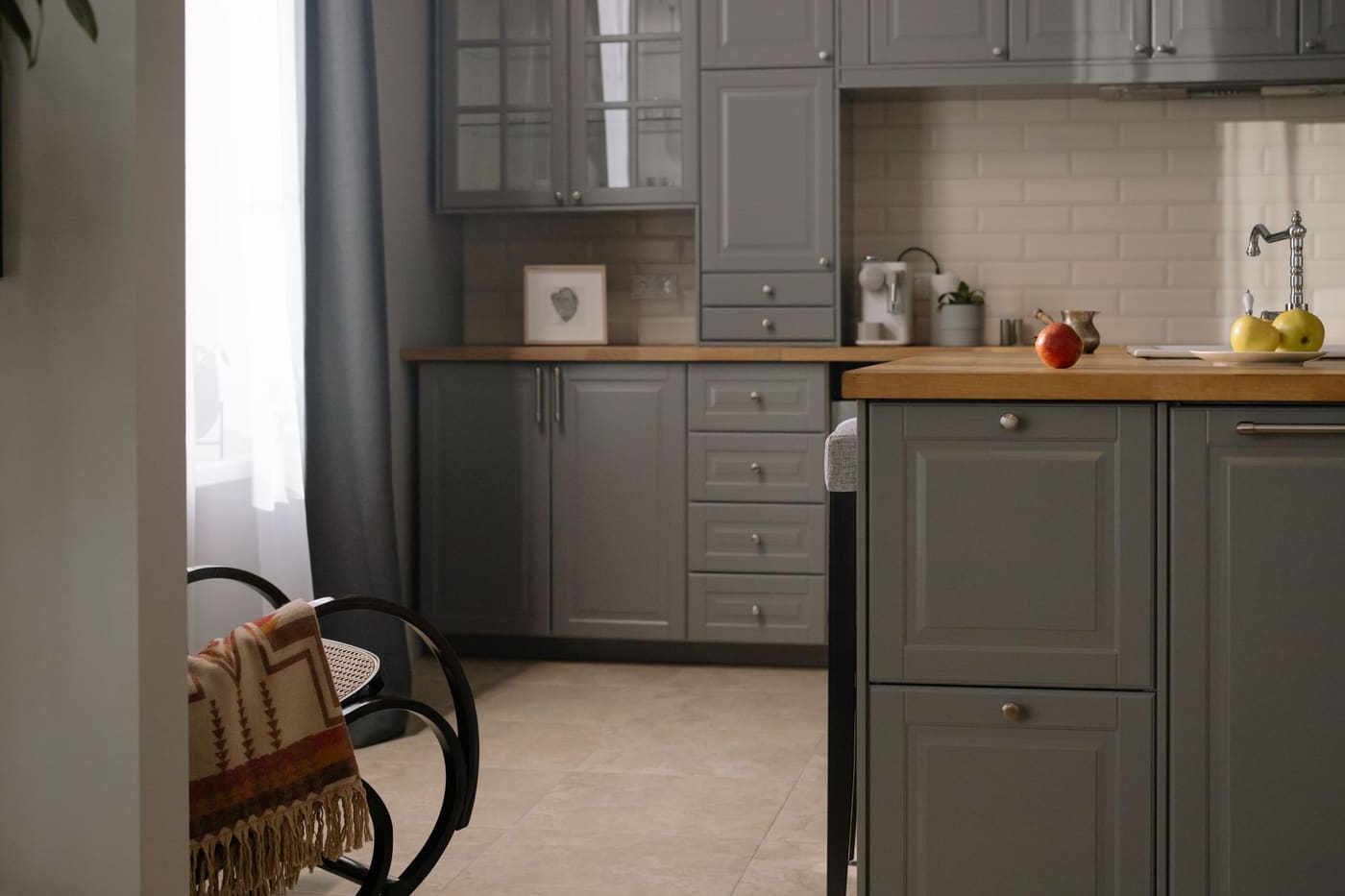
Choose a durable surface. Butcher block is light and warm but needs oil and care. Laminate is light and cheap. Quartz and solid surface are heavier, which matters in a house that is towed, and require professional fabrication and installation in many cases.
Storage that works near the point of use
Cabinets are useful only if you can get to the contents. In a tiny kitchen, drawers usually beat door cabinets, because you see everything from above.
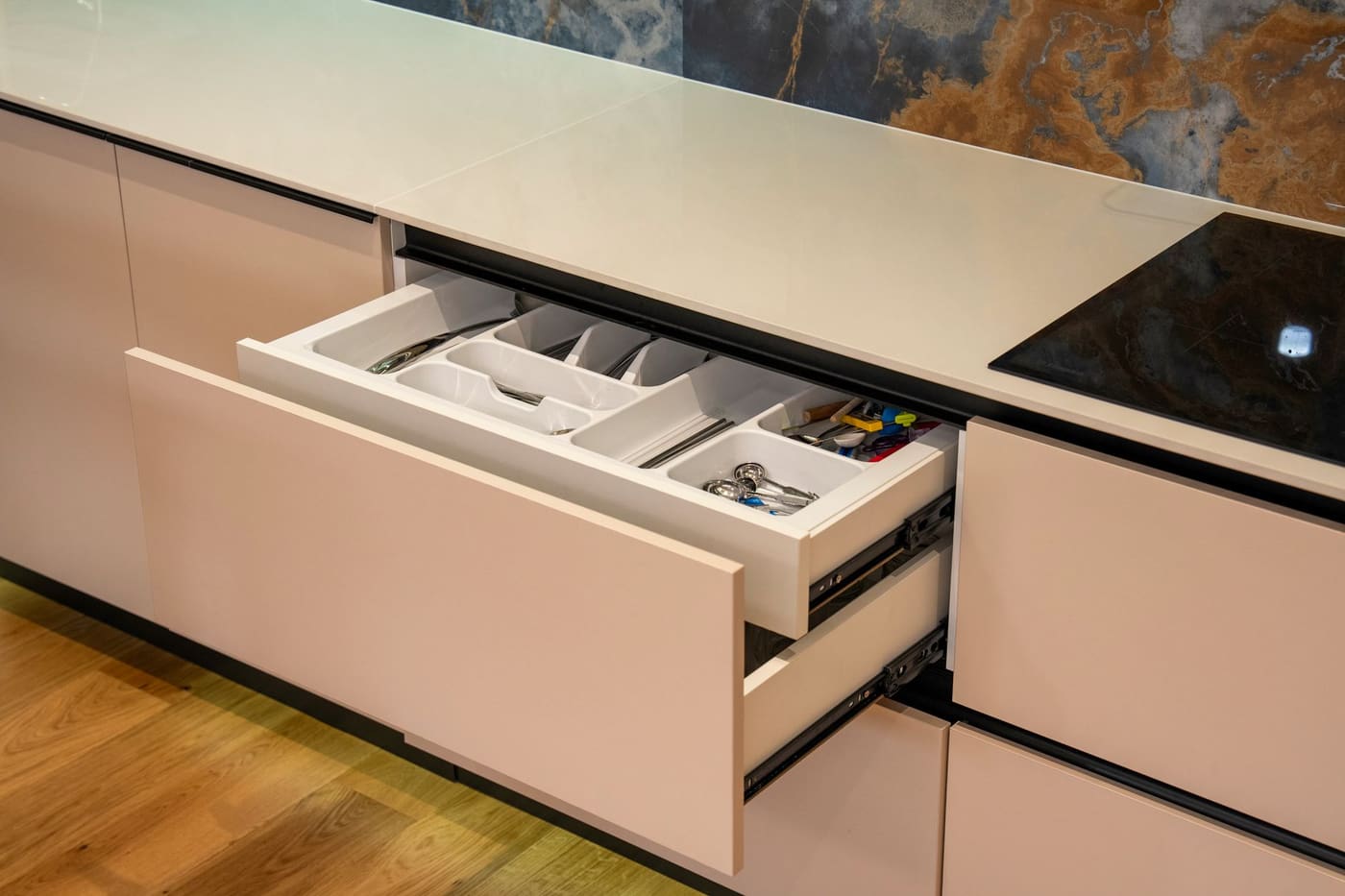
- Deep drawers of 6 to 10 inches for pots, pans, and lids, near the stove.
- A shallow utensil drawer or rail near the prep spot.
- A pull-out pantry of 6 to 12 inches wide for cans and jars, useful in a narrow gap beside the refrigerator.
- A rail with hooks for mugs and tools, which frees cabinet space.
- A vertical lid and baking sheet rack in a narrow cabinet.
Keep dishes and food to a number that fits. Two to four place settings, one or two pots, a skillet, and a sheet pan cover most daily cooking. The broader guide to adding storage in a tiny house without overstuffing it shows how to set caps for each category.
Choose cooking equipment by how you cook
Equipment takes the most space and money, so match it to real habits.
Cooktop
A two-burner cooktop is the common sweet spot. Induction models heat quickly, are easy to clean, and stay cool around the pan, but they require compatible cookware and adequate electrical capacity. Propane or natural gas cooktops need a licensed professional to install and leak-test the connection, and gas appliances need ventilation and a carbon monoxide alarm. Do not attempt gas line work yourself.
Oven
A full 24 to 30 inch oven is often too much. A compact convection oven, toaster oven, or small built-in oven handles most baking and roasting. Choose by the largest dish you actually cook, and check whether a 9 by 13 inch pan fits.
Refrigerator
An under-counter or apartment-size unit of 4 to 10 cubic feet is common. If the house moves, confirm that the unit is built to handle transport, and secure the door. Shopping more often for fresh food can be a trade for a smaller refrigerator.
Small appliances
Pick one or two tools that replace several. An electric multicooker can slow cook, steam, and pressure cook. A good blender may replace a food processor. Everything else should earn its way in by being used weekly.
Make the sink do double duty
A single deep bowl, around 8 to 10 inches deep, is more useful than a shallow double bowl. Add a cutting board or cover that fits the top, and the sink becomes extra counter when it is not in use. A pull-down faucet helps with big pots, and a low-flow aerator extends water in a limited tank.
Plan the drain and venting correctly, because slow drains and odors usually come from slope or venting errors. Have a licensed plumber handle new drain lines. If you rely on a water tank and pump, check that the pump can supply the faucet and that the tank is sized for your daily use.
Do not skimp on ventilation and safety
Cooking in a small space fills the air with steam, grease, and smoke fast. Prioritize:
- An exhaust fan or range hood vented outdoors. Recirculating hoods only filter grease and do not remove moisture or gases.
- A smoke alarm and a carbon monoxide alarm, installed and tested according to the manufacturer.
- A fire extinguisher rated for kitchen use, within reach but not right beside the stove.
- Safe clearances. Keep curtains, paper, and wood shelves away from the cooktop at the distances the manufacturer specifies.
- Secure everything for travel, including latches on drawers and doors, and a stove lock or removable pot clamps if the house moves.
Electrical work for cooktops, ovens, and exhaust fans, and any gas or propane work, must be done by licensed professionals. Local codes and inspections vary, so check requirements before you buy appliances.
Features that look good but rarely pay off
Be skeptical of these.
- Open shelving everywhere. It shows clutter and collects grease. Use a few shelves at most.
- A full-size dishwasher. It takes space and water connections. A drying rack and a deep sink do the job for many households.
- A large island. It eats walking space. A narrow fold-out counter is more practical.
- Specialty gadgets. Bread makers, ice cream machines, and similar items sit unused.
- Heavy stone counters in a house on wheels. They add weight, and lighter options work well.
- Too many small drawers. Fewer, larger drawers are easier to use.
Where to spend
Costs vary too widely by region and finish level to quote here. Spend where you notice it daily, such as drawers with quality slides, a good faucet, and a solid counter, and save on items like knobs and open shelving. Hiring licensed trades for gas, electrical, and plumbing adds cost but is not optional where codes require it.
If your small kitchen is part of a larger plan, the guide on what makes a tiny house layout work better shows how it fits with circulation and other zones. Also, if the kitchen counter becomes a catch-all, why a tiny house still feels cluttered explains why.
Where this comes from
The ranking is a judgment based on general kitchen-planning practice, including the National Kitchen and Bath Association’s Kitchen Planning Guidelines, not on testing any appliance or kitchen. Dimensions such as counter length and drawer depth are common rules of thumb. Gas, electrical and ventilation requirements vary by location, and appliance features and prices change, so confirm current requirements with your local building office and the appliance manufacturer.